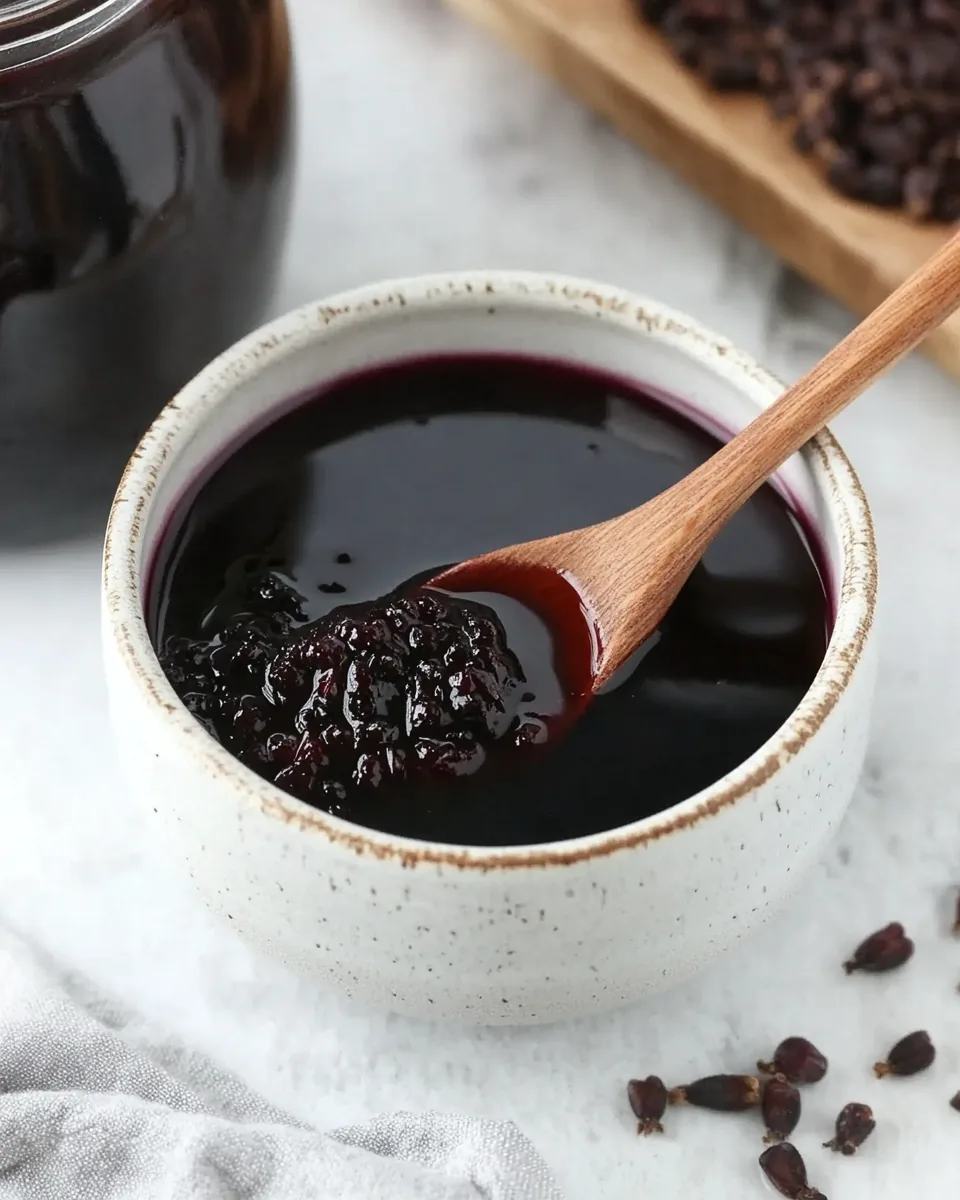
Begin by combining the dried elderberries, water, ground cinnamon, ground cloves, and fresh ginger in a medium-sized saucepan. Use a saucepan that’s large enough to allow for boiling without spilling over. Set the heat to high and bring the mixture to a boil. You’ll notice the vibrant color of the elderberries and the comforting scent of the spices filling your kitchen. This is the exciting part, as you’re just moments away from making your syrup!
Once the mixture reaches a rolling boil, lower the heat to a gentle simmer. Allow it to simmer for about 25 to 30 minutes. During this time, keep an eye on the consistency of the liquid; it should reduce by about half. You’ll see the color intensify, and the elderberries will soften, releasing their essence into the water. Stir occasionally to prevent anything from sticking to the bottom of the pan.
When the simmering time is complete, pour the cooked mixture through a fine mesh strainer into a clean bowl. This step helps separate the elderberries from the liquid. Use the back of a spoon to press down on the berries in the strainer, ensuring you extract as much juice as possible. The resulting liquid should be a deep, rich color. Discard or compost the leftover pulp in the strainer.
Allow the strained elderberry juice to cool to room temperature. This is an important step, as you don’t want to add the honey when the liquid is still hot. The cooling process will also help develop a more robust flavor in your syrup.
Once cooled, stir in the honey, using a whisk to incorporate it smoothly. This will sweeten the syrup and enhance its flavor. You may adjust the sweetness to your preference by adding more or less honey.
Finally, transfer your Elderberry Syrup into a sealed glass jar. Make sure you choose a jar that’s easy to pour from and store. Label the jar with the date so you can keep track of its freshness.