Prep Custard Eggs: Crack four large eggs and one egg yolk into a medium bowl. Let them sit at room temperature while you prepare the pie crust.
Mix Ingredients: In the bowl of a stand mixer fitted with the paddle attachment, cream the unsalted butter and light brown sugar at medium speed for about two minutes until smooth and fluffy. Add the egg yolk and vanilla extract, mixing to combine. Scrape down the sides of the bowl, then add the all-purpose flour, rolled oats, and salt, mixing on low speed until everything is just combined. Don’t overmix! Add the water and mix again until the dough is smooth and cohesive.
Form Crust: Lightly spray a standard 9-inch pie plate with nonstick cooking spray, or use a spray that contains flour. Press the dough evenly up the sides and into the bottom of the pie plate. Be careful not to compact the dough too much, or it may become difficult to remove later.
Chill: Place the crust in the refrigerator and chill it for at least thirty minutes, or even overnight if you have the time. This step is crucial for achieving a flaky crust.
Par-bake: Preheat your oven to 375 degrees F. As soon as you put the crust in the oven, start making the custard filling to ensure it can be added to a warm crust. Bake the crust without pie weights for about twelve to fifteen minutes, or until it’s lightly golden. A quiche pan will require only eight to ten minutes. Once baked, let the crust cool for about ten minutes.
Oven: Reduce the oven temperature to 325 degrees F in preparation for baking the pie.
Scald Milk: In a medium saucepan, combine the heavy cream and whole milk over medium-low heat. Warm it just until you see tiny bubbles forming around the edges, about two to three minutes. Remove from heat; you don’t want it to boil.
Whisk Eggs and Sugar: While the milk is heating, whisk the eggs and the additional egg yolk in a medium bowl until combined. Gradually whisk in the granulated sugar, vanilla bean paste, and the spices including the ground nutmeg. This mixture should be even and well-distributed, adding the nutmeg at this stage or sprinkling it over the pie before baking, depending on your preference.
Temper Eggs: To avoid scrambling the eggs, slowly drizzle one ladleful of the hot milk mixture into the egg mixture, whisking constantly. Repeat this process until the milk is fully incorporated, ensuring everything is well combined.
Strain Custard: To achieve a silky-smooth custard, hold a fine mesh sieve over the warm pie crust and pour the custard filling through it. This will catch any coagulated egg specks that may have formed.
Bake: Cover the edges of the pie shell with a pie shield or wrap lightly with aluminum foil to prevent over-browning. Bake the pie for forty to fifty-five minutes, starting to check at forty minutes. It’s done when an instant-read thermometer inserted into the center reads between 175 and 180 degrees F, the outer edges are set, but the center remains jiggly. Don’t be alarmed; the filling will continue to set as it cools. A knife inserted into the center should come out clean, but this can also indicate overbaking, so use the thermometer as your primary guide.
Cool: Once baked, cool the pie on a wire rack for about two hours. Then refrigerate for at least four hours, but overnight is best for optimal flavor and texture.
Cook: To prepare the pecan topping, combine the chopped pecans, brown sugar, corn syrup, butter, salt, and cinnamon in a small saucepan. Cook over medium heat, stirring constantly, until the sugar and butter melt and form a sticky coating. Stir in the heavy cream and the vanilla extract until everything is well combined.
Cool: After cooking, let the pecan mixture cool for about ten minutes before spreading it over the custard pie. Adjust the seasoning to your liking—feel free to add more salt or cinnamon to taste.
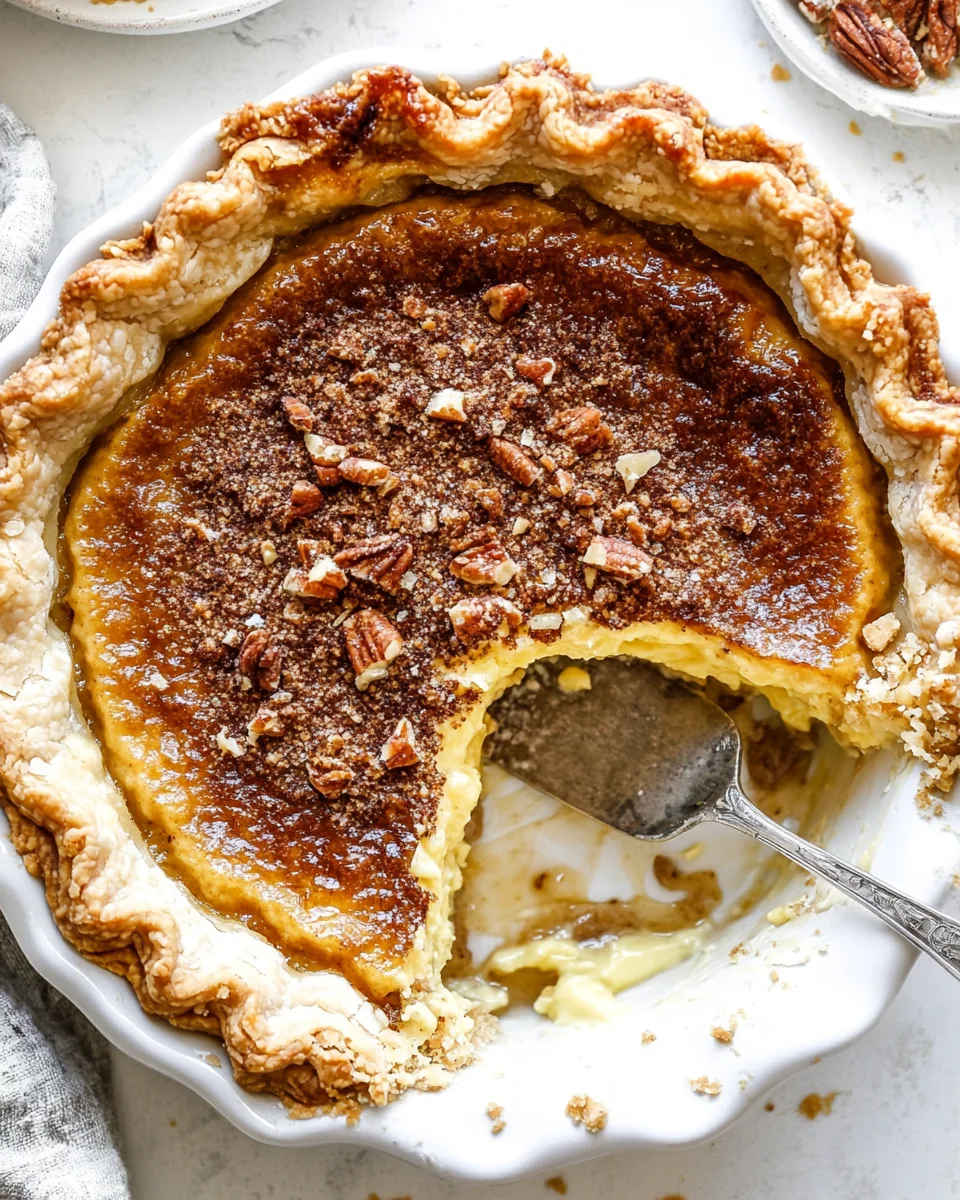
Top: Finally, transfer the pecan topping to the pie and spread it as desired. Finish by sprinkling with one tablespoon of coarse sugar for that perfect crunch.